Every water company in the Valley says "Fresno water is hard." Almost none of them show you a number. Here are the ones the city publishes.
Where Fresno's water comes from
Fresno was 100% groundwater until 2004. Today the city blends water from roughly 260 groundwater wells with treated surface water from Millerton Lake (San Joaquin River, via the Friant-Kern Canal and the Northeast Surface Water Treatment Facility) and Pine Flat Reservoir (Kings River, via the Southeast plant). Which mix reaches your tap depends on where you live and the season — and that is the single biggest reason two Fresno homes can test very differently.
Fresno hardness, TDS and chlorine (2024 report)
| Measure | Average | Range | What it means at home |
|---|---|---|---|
| Hardness (as CaCO₃) | 89 mg/L (≈5.2 gpg) | 65–190 mg/L (≈3.8–11 gpg) | Moderately hard on average; "very hard" at the top of the range. Scale, spots, dry skin. |
| Total dissolved solids | 176 mg/L | 130–340 mg/L | What RO removes at the kitchen tap. |
| Chlorine residual | 1.33 mg/L | 0.03–2.0 mg/L | The pool smell in the shower; carbon filtration removes it. |
| Nitrate (as N) | 4.9 mg/L | 0–13 mg/L | Limit is 10. Some individual wells exceed it before blending. |
| Arsenic | 5.1 µg/L | ND–16 µg/L | Limit is 10. Blended system average is below; individual wells vary. |
Source: City of Fresno Department of Public Utilities, 2024 Consumer Confidence Report. Grains per gallon converted at 17.1 mg/L per grain. The report also notes one well (50A) exceeded the 1,2,3-TCP limit in 2024 and was resampled below it.
How the neighbors compare
| City | Source | Hardness avg (range) | Notes |
|---|---|---|---|
| Fresno | ~260 wells + Kings/San Joaquin surface water | 89 mg/L (65–190) | 2024 CCR |
| Clovis | 69% wells, 31% Kings River | 120 mg/L (7.8–290) | 2024 CCR · TDS 28–510 ppm |
| Madera (city) | 100% wells | 20 mg/L (0–110) | 2025 CCR · county wells differ |
| Selma (Cal Water) | Wells | 53 mg/L | 2025 report · soft |
What the USGS scale actually says
- Soft: 0–60 mg/L (under 3.5 gpg)
- Moderately hard: 61–120 mg/L (3.5–7 gpg)
- Hard: 121–180 mg/L (7–10.5 gpg)
- Very hard: over 180 mg/L (10.5+ gpg)
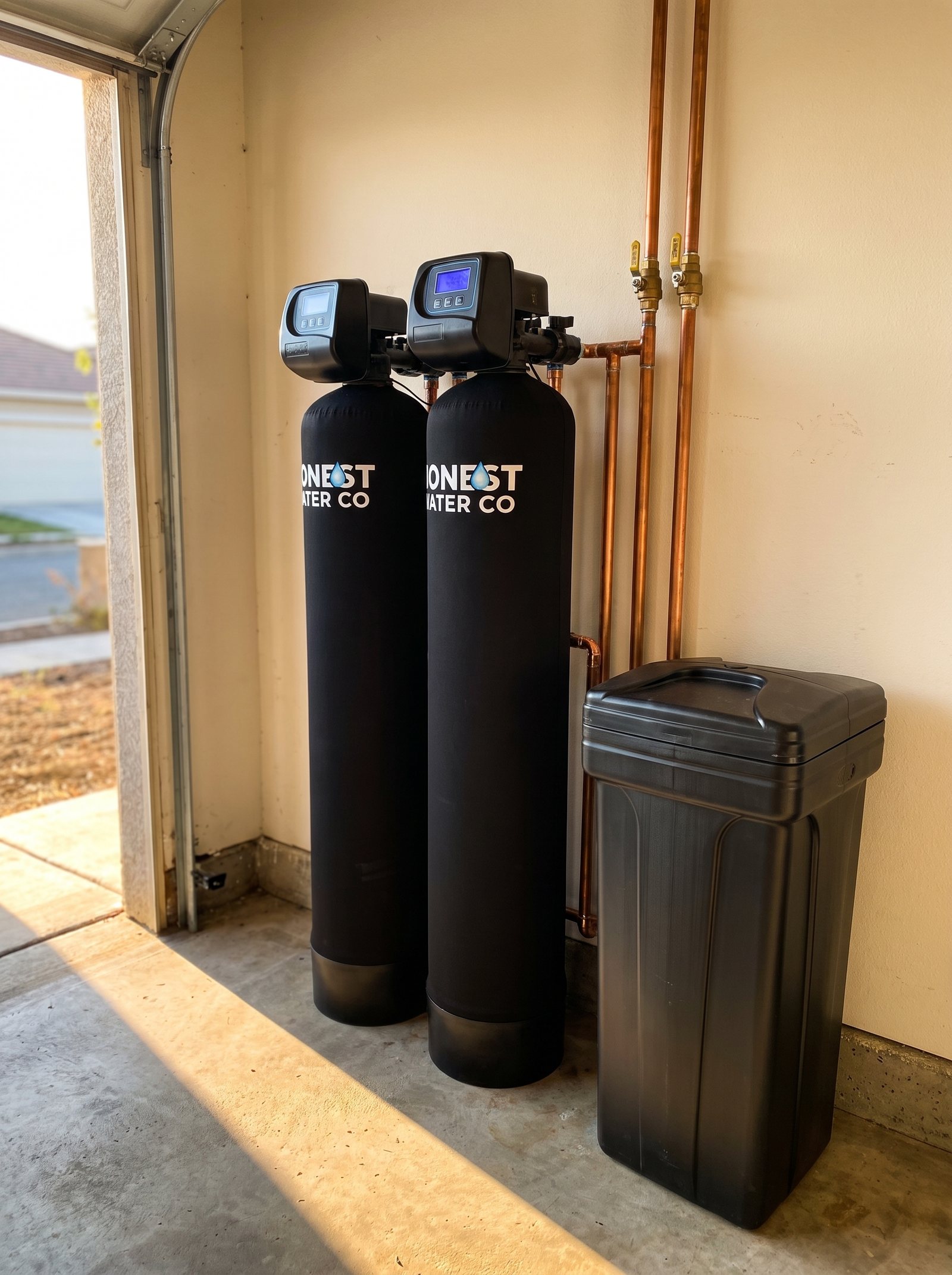
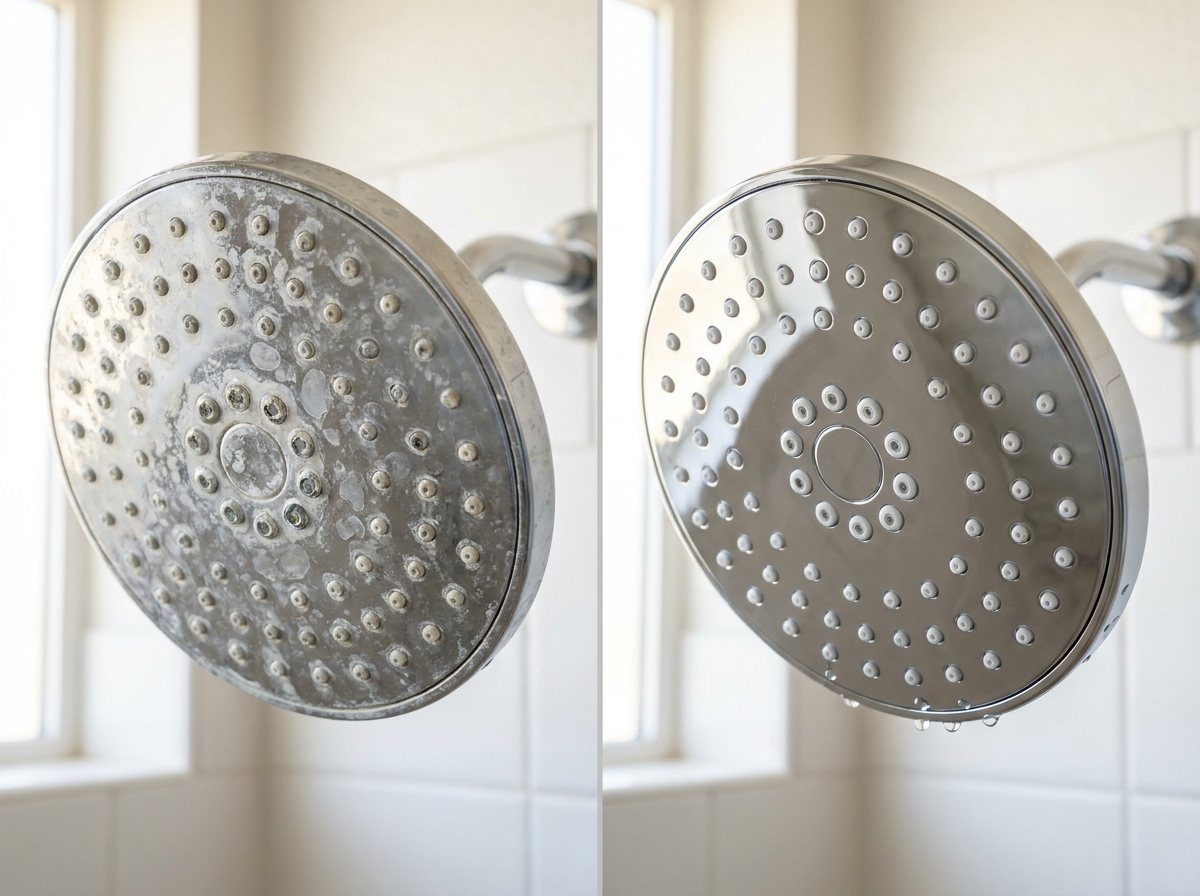
Above about 7 grains, most homeowners start seeing the classic symptoms: white crust on fixtures, cloudy glasses, soap that won't lather, and a water heater that pops and rumbles as scale builds on the element. A softener fixes that. Chlorine taste and smell is a separate problem, fixed by a carbon filter. Dissolved solids, nitrate and metals at the drinking tap are a third, fixed by reverse osmosis.
What about private wells?
None of the city numbers apply if you're on a private well in Madera Ranchos, Kerman, Easton, Sanger's outskirts or the county. Wells get no blending and no treatment, and in farm country nitrate near the limit, iron staining and sediment are common. Those get a separate on-site test.