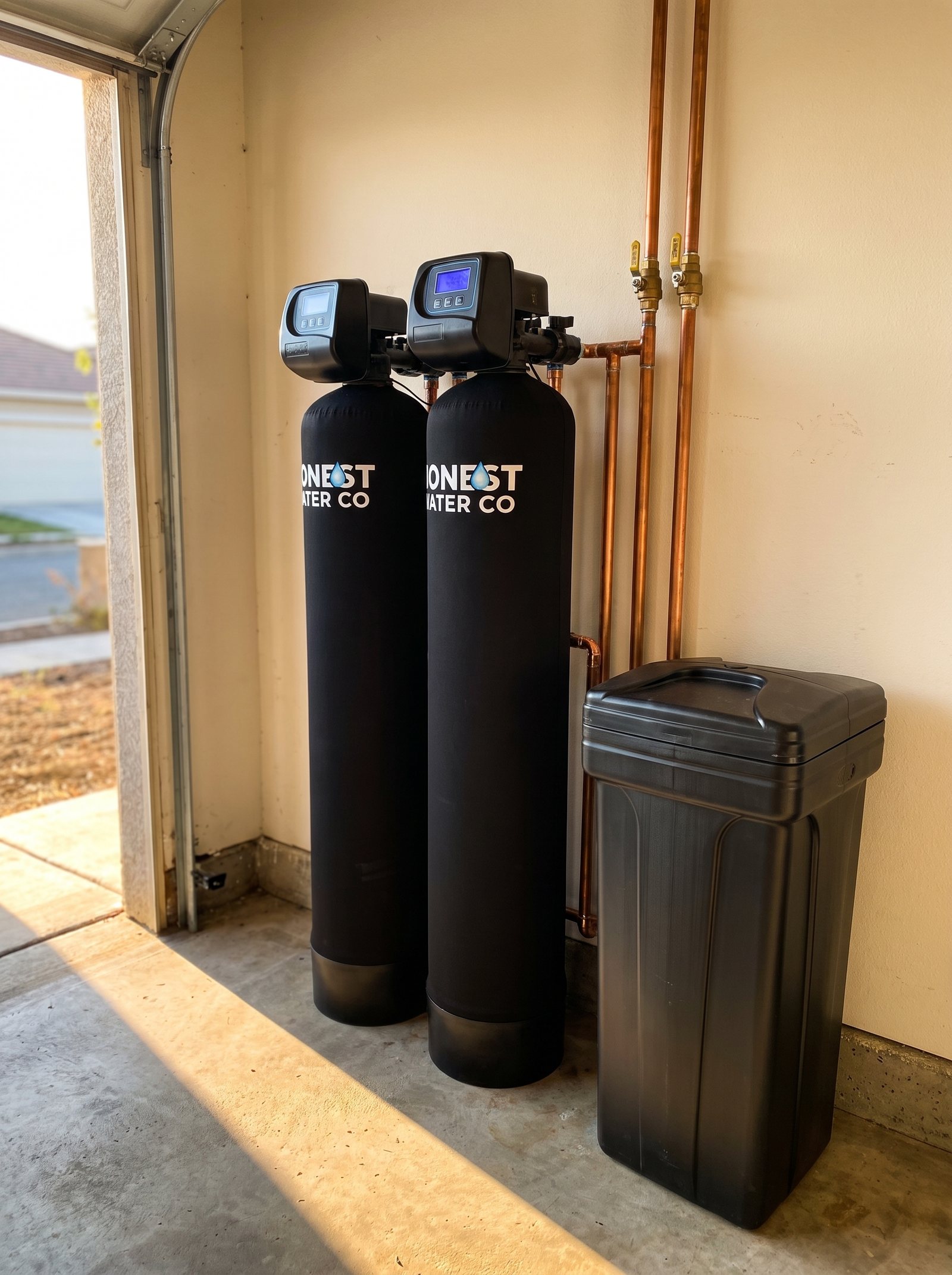
What a salt-based softener does
It removes calcium and magnesium — the hardness — by ion exchange, swapping them for sodium on a resin bed. The water that comes out tests soft. Soap lathers, scale stops forming, glasses come out clear, skin stops feeling tight. The resin regenerates periodically with a brine (salt) solution; with a metered valve that happens only when you've actually used the capacity.
What a salt-free conditioner does
It does not remove hardness. Template-assisted crystallization (TAC) media changes the hardness minerals into microscopic crystals that are less likely to stick to pipes and heating elements. The water still tests hard, soap still behaves like hard water, but scale inside the water heater and on fixtures is reduced. No salt, no drain, no regeneration.
Which one for Fresno and Clovis
| You want… | Choose |
|---|---|
| Truly soft water: lather, no spots, soft skin and laundry | Salt-based softener |
| Mainly to protect the water heater and can't have salt or a drain | Salt-free conditioner |
| Very hard water (10+ gpg — parts of Clovis) | Salt-based softener; conditioners struggle at the top of the range |
| Chlorine taste and smell | Neither — that's a carbon filter |
| Better drinking water at the sink | Neither — that's reverse osmosis |
The sodium question
A softener adds a small amount of sodium to the water in proportion to hardness — typically a few tens of milligrams per liter at Fresno hardness levels, which is far below what's in most foods. If you're on a sodium-restricted diet or simply prefer none, the standard answer is reverse osmosis at the drinking tap, which removes it along with everything else. Potassium chloride can also be used in place of sodium chloride in the brine tank.